

What is Haleem?
Haleem is a traditional dish renowned for its rich flavors and unique blend of ingredients, primarily originating from South Asian and Middle Eastern cuisines. This savory porridge-like preparation characterizes itself through a meticulous cooking process that transforms a mixture of wheat, barley, lentils, and various meats—commonly chicken, beef, or mutton—into a harmonious and hearty dish. The cooking method typically involves slow-cooking these components together for several hours, allowing the flavors to meld and the grains to break down into a buttery consistency.
What makes haleem particularly distinctive is its emphasis on spices. The dish is seasoned with an array of spices such as cumin, coriander, and cinnamon, which contribute to its aromatic quality, enhancing the overall taste experience. Additionally, garnishes such as sliced lemons, fried onions, and fresh herbs like cilantro are often added just before serving, providing a refreshing contrast to the dish’s richness. The cultural significance of haleem cannot be overstated, as it is not only a culinary delight but also a staple during the month of Ramadan, celebrating its communal spirit when shared among family and friends during iftar.
Haleem varies in preparation and presentation across different regions. In India and Pakistan, it holds a special place during festivals and gatherings, where its preparation is seen as a labor of love. The Middle Eastern versions often highlight regional spices, leading to subtle variations that showcase local flavors. Although its history dates back centuries, the evolution of this dish reflects a fusion of cultures and traditions, establishing haleem as a beloved delicacy across regions. Its comforting taste and hearty texture make it a sought-after meal that resonates with diverse culinary practices, thus ensuring its continued popularity even in modern dining experiences.
The Origin of Haleem
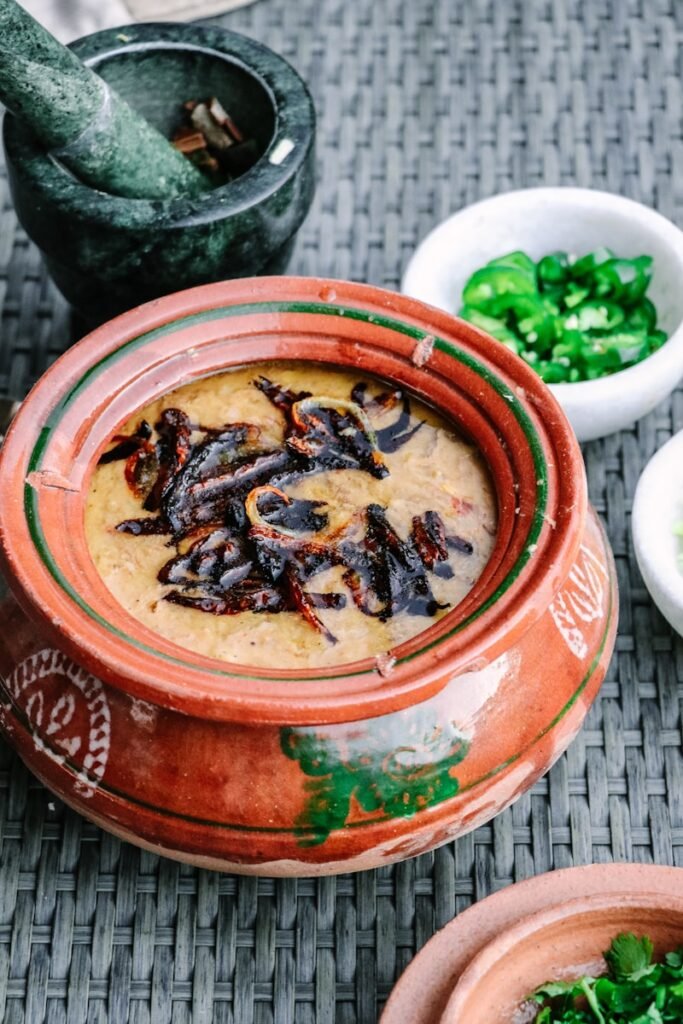
Haleem is a dish with deep historical roots, tracing its origins back to ancient times. While its precise beginnings are somewhat uncertain, it is widely believed that haleem emerged in the Middle East, particularly in regions such as Arabia and Persia. The dish was initially created as a nourishing food for travelers and soldiers, providing them with essential sustenance in a convenient manner. The primary ingredients of wheat, barley, lentils, and meat allowed for a hearty meal that could sustain energy levels during long journeys.
As trade routes expanded, especially during the medieval period, the recipe for haleem began to evolve. Exposure to different cultures led to adaptations in ingredients and preparation methods, particularly as it moved into South Asia through conquerors and traders. In this region, haleem became a favored dish, particularly during the month of Ramadan. It was particularly popular in cities such as Hyderabad, where local spices and cooking techniques contributed to the development of unique versions, showcasing the dish’s versatility.
The integration of diverse culinary influences over the centuries has resulted in various types of haleem being prepared in different cultures. For example, in Hyderabad, a thick, spicy version is often enjoyed during festivals, while in Iraq, a more soup-like consistency is favored. The communal aspects of preparing and enjoying haleem have solidified its status as a symbol of hospitality and cultural pride, particularly in Muslim communities across the globe. Thus, from its ancient beginnings to its modern-day interpretations, haleem continues to be a beloved dish, celebrated for its rich flavors and cultural significance.
Historical Significance and Cultural Context
Haleem holds a prominent place in the culinary traditions of various cultures, particularly in South Asian and Middle Eastern communities. It is often prepared and savored during significant festivals and celebrations, where it serves as a symbol of communal sharing and unity. The dish’s origins can be traced back to the 10th century, when it was introduced to the Indian subcontinent through Persian influences. Over the years, haleem has evolved, incorporating local ingredients and flavors while retaining its core essence. This adaptability highlights its historical significance as a bridge between cultures.
In Indian tradition, haleem is especially popular during the holy month of Ramadan. It is frequently made by families and served at iftar gatherings, where it signifies both nourishment and reconciliation. The lengthy cooking process, which may take several hours, is often a communal effort, bringing families and friends together. This reinforces the cultural context in which haleem is consumed, serving not just as a meal, but as part of social rituals and familial bonds.
Moreover, in communities such as the Hyderabadi and Lucknowi, haleem is regarded as a festival staple during the month of Ramadan and on special occasions such as weddings and Eid celebrations. Its preparation often involves elaborate techniques and cherished family recipes passed down through generations. This connection to heritage further enhances its value in the cultural landscape, marking it as more than just a dish, but a representation of identity and tradition.
Overall, haleem is deeply woven into the historical and cultural practices of numerous societies, showcasing the collective effort of communities that embrace this cherished dish during moments of joy and festivity. Its enduring appeal and significance reflect a rich tapestry of shared values and culinary artistry.
Ingredients and Cooking Process
Haleem, a popular dish celebrated for its rich and hearty nature, is primarily composed of a unique blend of ingredients that each contribute to its distinctive flavor profile. The cornerstone of this dish is the combination of wheat and a variety of lentils, which form the foundation of its thick, smooth texture. Wheat, typically in the form of cracked wheat or bulgur, is essential for binding the dish and providing a hearty base that contrasts beautifully with the tender meats that are often included, such as chicken, beef, or lamb.
In addition to wheat and lentils, Haleem often incorporates an array of spices that elevate its flavor complexity. Commonly used spices include cumin, coriander, and a variety of garam masala elements, which add warmth and depth. Fresh herbs like coriander and mint are usually added as garnish to enhance the dish’s aromatic quality. Furthermore, the inclusion of fried onions, green chilies, and a drizzle of clarified butter (ghee) just before serving adds a final touch of richness that makes Haleem irresistible.
The cooking process of Haleem is a labor of love that emphasizes slow cooking. Traditionally, the dish is prepared over several hours, allowing the ingredients to meld together and develop a rich, deep flavor. This slow cooking not only enhances the taste but also gives the dish its signature creamy texture. Initially, the wheat and lentils are soaked to soften them, followed by a meticulous simmering with the meat over low heat. Stirring frequently is necessary to ensure that the mixture does not stick to the pot, which further aids in achieving that desirable consistency. Authentic preparation of Haleem can take anywhere from six to twelve hours, exemplifying the significant time and care invested in creating this iconic dish.
Taste Profile of Haleem
Haleem is celebrated for its unique and complex taste profile, which stems from a carefully crafted balance of flavors and spices. At its core, this dish blends meat, lentils, and an array of spices, resulting in a rich and savory flavor that appeals to a wide audience. The quality of the meat used, typically chicken or beef, plays a pivotal role in the overall taste. Cooking the meat low and slow allows it to become tender while releasing its natural juices into the dish.
The combination of spices is essential for enhancing Haleem’s distinct flavor. Commonly used spices include cumin, cloves, and cardamom, each contributing its unique notes. Cumin, for instance, offers an earthy warmth, while cloves add depth and brightness. The inclusion of Kashmiri red chili not only provides a mild heat but also a vibrant color, making the dish visually appealing. The spices work together to create a harmonious blend without overwhelming any single ingredient, reflecting the culinary tradition of meticulous seasoning.
Another critical aspect of Haleem’s flavor profile is the use of lentils and grains, such as barley or wheat. These ingredients lend creaminess and a slight nuttiness to the dish, further enriching its taste. As the ingredients meld together during the slow cooking process, they create a smooth, cohesive texture, further enhancing the experience of eating Haleem. Additionally, the garnishes—such as fried onions, fresh cilantro, and lime—add layers of flavor, allowing diners to customize their experience with every bite.
In essence, the taste profile of Haleem is a symphony of textures and flavors that reflect its rich cultural heritage and culinary finesse. This careful balance of ingredients creates a dish that is not only satisfying but also a delight for the senses.
Texture and Consistency
The texture and consistency of haleem are pivotal aspects that contribute to its appeal and enjoyment. At its core, haleem is renowned for being smooth, thick, and creamy, characteristics achieved through an extensive cooking process that spans several hours. This devoted preparation time is essential in melding the various ingredients, which typically include wheat, barley, lentils, and meats, into a harmonious blend. The prolonged cooking not only enhances flavors but also transforms the textures, allowing for a silky and uniform consistency that is pleasing to the palate.
As the ingredients simmer and meld together, the slow cooking method breaks down the proteins and starches, resulting in a cohesive mixture that is both hearty and velvety. This transformation is a hallmark of traditional haleem, ensuring that each spoonful delivers a comforting mouthfeel. The creaminess is further accentuated by the inclusion of spices and ghee, which provide richness and depth to the overall texture. When properly prepared, the dish achieves a luxurious consistency that invites diners to savor each bite.
The thick texture of haleem plays an important role in its consumption. It is often served in bowls, allowing diners to experience its satisfying heaviness, complemented by optional garnishes such as fried onions, mint, and coriander. These additions not only enhance the visual appeal but also add layers of texture, contrasting with the creamy base. The interplay between the smoothness of haleem and the crunchiness of toppings creates a dynamic eating experience that keeps it both exciting and comforting.
Ultimately, the unique texture and consistency of haleem make it a beloved dish in various cultures, celebrating the fusion of flavors and mouthfeels that comes from its rich culinary heritage. This balance ensures that haleem is not simply a meal but an experience, making it a staple in many kitchens around the world.
Regional Variations of Haleem
Haleem, a rich and hearty dish, has transcended its origins to adapt to local cultures and culinary preferences, resulting in delightful regional variations that highlight the diversity of this traditional recipe. One of the most celebrated adaptations is the Hyderabadi haleem, a dish that stands as a testament to the culinary fusion in Hyderabad, India. Known for its unique preparation style, Hyderabadi haleem incorporates a mix of meat, lentils, and a variety of spices, slow-cooked to attain a creamy consistency. This version often includes a garnish of fried onions, lemon wedges, and mint leaves, adding layers of flavor that are characteristic of Hyderabadi cuisine.
Another notable variant is Lucknowi haleem, which reflects the rich Mughal influence in Lucknow, India. This variation tends to be slightly milder in flavor compared to its Hyderabadi counterpart, opting for a more aromatic spice blend that includes cardamom and cloves. The preparation of Lucknowi haleem is meticulous, requiring long hours of cooking, which allows the ingredients to meld beautifully. Often served during the month of Ramadan, it is traditionally enjoyed with naan or parathas, making it a staple for festive gatherings.
Beyond the Indian subcontinent, haleem has found its place in Middle Eastern culinary traditions. Countries such as Turkey and Iraq have their interpretations of this classic dish, often utilizing different grains and cooking techniques. Turkish haleem, for instance, focuses on a wheat-based preparation, giving it a distinct texture, while Iraqi haleem incorporates local spices that enhance its flavor profile. These regional adaptations not only make haleem a versatile dish but also showcase the rich tapestry of cultures that contribute to its enduring popularity.
Haleem in Modern Culture and Cuisine
Haleem has transcended its traditional beginnings to carve a significant niche in modern culture and cuisine. While the dish has deep roots in South Asian culinary traditions, particularly among Muslim communities, its unique flavors and textures have garnered appreciation across diverse gastronomic circles. In recent years, there has been a notable resurgence of interest in haleem, reflecting contemporary trends in food that celebrate both heritage and innovation.
Street food vendors have played an essential role in bringing haleem to the masses, allowing this traditionally festive dish to reach wider audiences throughout the year. In cities like Hyderabad, Mumbai, and Karachi, stalls offering haleem have become commonplace, serving variations that cater to modern palates. Many vendors have adopted different techniques, using innovative cooking styles and fusion ingredients, while still honoring the dish’s original essence. This adaptability has propelled haleem into the realm of popular street food, appealing to both locals and tourists alike.
Moreover, numerous restaurants have incorporated haleem into their menus as a signature dish, showcasing it alongside various contemporary culinary creations. Chefs are experimenting with its presentation and flavor combinations, often pairing haleem with side dishes or elevating its components to craft upscale dining experiences. This evolution speaks to the versatility of haleem and its capacity to resonate with a generation that values both authenticity and creativity in cuisine.
As we observe the increasing embrace of haleem in a wider array of dining scenarios, it is apparent that this dish continues to thrive. Its endurance demonstrates not only the deep-seated cultural ties it holds but also its ability to evolve and captivate palates in modern culinary landscapes. The future of haleem in cuisine looks promising as it captures the hearts and taste buds of a diverse audience while shedding light on its rich heritage.
Conclusion: The Legacy of Haleem
Haleem represents much more than just a dish; it embodies a rich tapestry of history, culture, and culinary tradition. Originating in the Middle East, this delightful food has transcended geographical boundaries to become a cherished staple in various South Asian communities, particularly during special occasions such as Ramadan and Eid. Throughout this exploration, we have uncovered the multifaceted aspects of haleem, from its ingredients to its preparation methods, revealing the labor of love involved in creating this comforting meal.
The legacy of haleem is intricately woven into the cultural identity of many societies, showcasing how food can unite individuals across differing backgrounds. Serving as a strong symbol of hospitality, this dish is often presented to guests, reinforcing community bonds and traditions. Haleem’s popularity continues to grow, ensuring that it remains an essential part of festive celebrations and family gatherings alike. The unique combination of flavors and textures that haleem offers distinguishes it from other comfort foods, elevating it to a revered status.
Furthermore, the artistry involved in crafting haleem—from the meticulous slow-cooking process to the careful blending of spices and lentils—illustrates the dedication of those who prepare it. For many, this dish is a nostalgic reminder of home, deeply tied to familial recipes passed down through generations. As we navigate the culinary world, it is vital to reflect on the experiences and stories behind our favorite foods, including haleem. This dish is not only a testament to the skill of its makers but also an invitation to explore its many variations, fostering a deeper appreciation for this wise melding of history and flavor.
As you embark on your culinary journey, consider trying to make or savoring a bowl of haleem. By doing so, you contribute to the preservation of its legacy while enjoying a dish that has warmed hearts and filled bellies for centuries.