
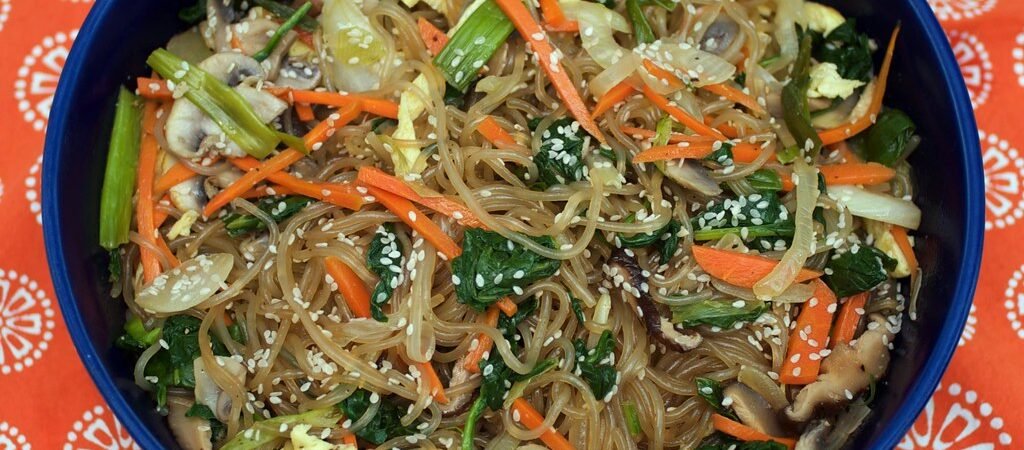
Introduction to Japchae: A Traditional Korean Dish
Japchae, a beloved dish in Korean cuisine, boasts a rich history that spans centuries. This savory stir-fried noodle dish is primarily made with sweet potato starch noodles, known as “dangmyeon,” which provide a delightful chewy texture. The versatility of japchae lies in its array of colorful ingredients, including a variety of vegetables such as carrots, spinach, and mushrooms, which not only enhance its flavor but also make it visually appealing.
Traditionally, japchae is often prepared with thinly sliced beef, although modern variations frequently incorporate proteins such as tofu for a vegetarian option. The combination of sweet and savory flavors, achieved through a mix of soy sauce, sesame oil, and sugar, renders the dish a unique taste experience that resonates with many. The preparation of japchae involves sautéing each component separately to highlight their distinct flavors before combining them into a harmonious medley.
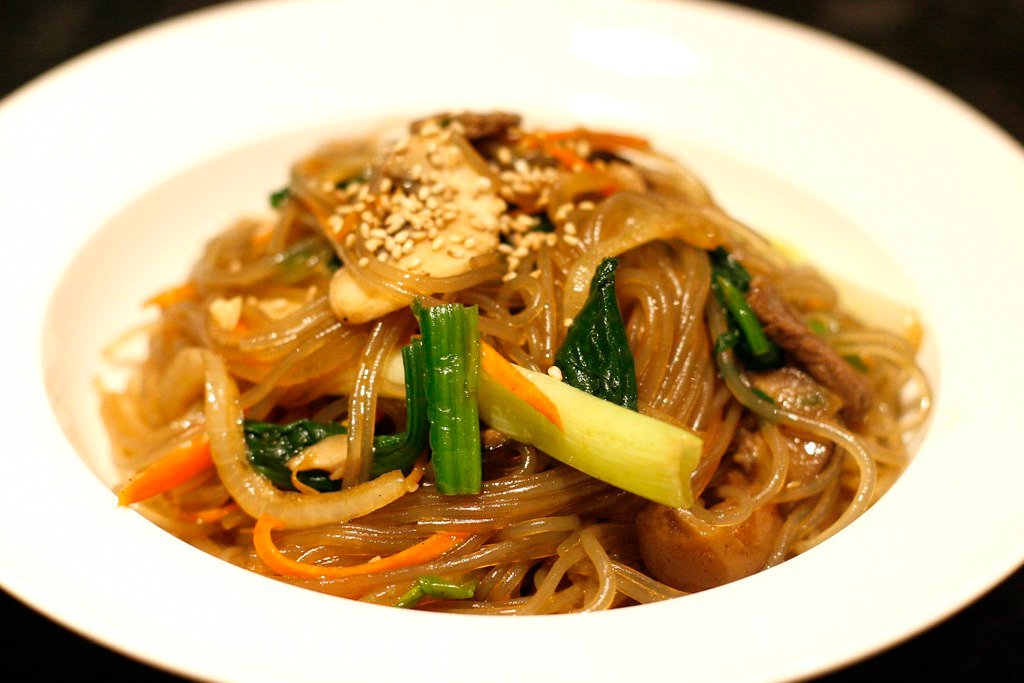
The cultural significance of japchae is evident in its presence during special occasions, including birthdays, weddings, and holidays. Its popularity in Korean households can be attributed to its adaptability; families often include seasonal vegetables and proteins based on personal preferences and availability. This dish is not merely a culinary representation but also a means of bringing people together, reflecting the essence of Korean hospitality.
As you embark on the journey of creating japchae, you will discover not only the delightful balance of flavors but also a connection to Korean tradition and its celebratory spirit. With the growing interest in global cuisine, learning how to make this traditional dish allows you to appreciate the intricate flavors and cultural significance that japchae embodies.
Ingredients Needed for Making Japchae
To create a delicious serving of japchae, a traditional Korean dish known for its chewy sweet potato starch noodles, several key ingredients are necessary. Each component contributes to the unique texture and flavor profile of this meal.
The primary ingredient is sweet potato starch noodles, commonly referred to as “dangmyeon.” These noodles are gluten-free, making them ideal for those with gluten sensitivities. When cooked, they provide a chewy texture that is characteristic of japchae.
Next, soy sauce plays a significant role in enhancing the dish’s savory flavor. For those adhering to a gluten-free diet, tamari offers a suitable substitute without sacrificing taste. Alongside soy sauce, sesame oil is essential, as it adds a rich, nutty aroma and flavor that complements the other ingredients.
When it comes to vegetables, the colorful assortment can vary based on personal preference. Commonly included are carrots, which offer sweetness and crunch; spinach, providing a nutritional boost and vibrant color; and bell peppers, contributing sweetness and a pop of color to the dish. Other vegetables such as onions, mushrooms, and zucchini are also popular choices that can enhance the overall flavor.
For a protein-rich option, beef strips or tofu can be incorporated. Tofu is an excellent substitute for those following a vegetarian or vegan diet. It can absorb the flavors of the sauce, creating a satisfying and wholesome meal. Additionally, if the dish needs to be lighter, replacing meat with a variety of seasonal vegetables can cater to vegan and vegetarian diets.
In summary, gathering the right ingredients is crucial for making authentic japchae. Whether you prefer traditional options or wish to explore substitutions, this flexibility ensures a satisfying dish that fits various dietary needs. Make sure to check your pantry for these items before heading to the store!
Step-by-Step Instructions for Preparing Japchae
Making japchae, a beloved Korean dish, can seem daunting, but with careful preparation and execution, you can create a remarkable and flavorful meal. To begin, gather all necessary ingredients, including sweet potato noodles, assorted vegetables, protein of choice (such as beef, chicken, or tofu), and a flavorful sauce typically consisting of soy sauce, sesame oil, and sugar.
Start by boiling water in a pot. Once it reaches a rolling boil, add the sweet potato noodles and let them cook until they become soft and chewy, which usually takes about 6-8 minutes. After boiling, drain the noodles and rinse them under cold water to stop the cooking process. Make sure to soak them in a bit of sesame oil to prevent sticking.
Next, prepare the vegetables. Common choices for japchae include carrots, bell peppers, onion, and spinach. Cut the vegetables into even, thin strips to ensure they cook uniformly. Heat a non-stick pan over medium heat and add a splash of oil. Sauté the vegetables for approximately 3-5 minutes, or until they’re tender but still crisp. It’s essential to stir continuously to avoid burning and to promote even cooking.
Now it’s time to cook the protein. In the same pan, add a bit more oil if necessary and incorporate your chosen protein. Cook for about 5-7 minutes, or until fully cooked through. If you’re using beef or chicken, ensure it is cut into matchstick-sized pieces for faster, even cooking.
Finally, combine all elements. Place the cooked noodles, sautéed vegetables, and protein in a large mixing bowl. Pour the pre-prepared sauce over the mixture, then toss gently to combine, ensuring every ingredient is well-coated. Serve immediately and enjoy the beautifully textured flavors of this traditional dish.
Serving Suggestions and Variations of Japchae
Japchae, a beloved Korean dish made with stir-fried glass noodles, is not only delicious but also versatile. When serving japchae, presentation is key to enhancing its appeal. The vibrant colors of the vegetables combined with the translucent noodles can create a striking visual effect. Consider serving japchae in a flat dish to showcase its beauty, or on individual plates garnished with sesame seeds or finely sliced green onions for a refined touch.
Pairing options can elevate the overall dining experience. Traditionally, japchae is enjoyed alongside kimchi, which adds a tangy contrast to the slightly sweet flavor of the noodles. Steamed rice, whether white or brown, can serve as a fragrant base that complements the dish, absorbing its rich flavors. For an even bolder experience, consider serving japchae with a side of grilled meats, which can provide a pleasant balance between the tenderness of the noodles and the savory profile of the protein.
The beauty of japchae lies in its adaptability. While the classic recipe often features beef, readers can experiment with different proteins to suit their preferences. Chicken, shrimp, or tofu can be excellent substitutes, providing varied textures and flavors. For those looking for a creative twist, incorporating fruits such as pineapple or mandarin oranges introduces a hint of sweetness that contrasts beautifully with the traditional savory notes. Additionally, tossing in nuts like walnuts or peanuts can contribute a delightful crunch to the dish, enhancing both flavor and texture.
Encouraging a personal touch, diners are invited to customize their japchae based on seasonal ingredients or personal tastes. The possibilities are endless, inviting culinary exploration. By experimenting with various toppings and sides, one can craft a unique dining experience that resonates with individual preferences, making each serving of japchae truly one of a kind.